
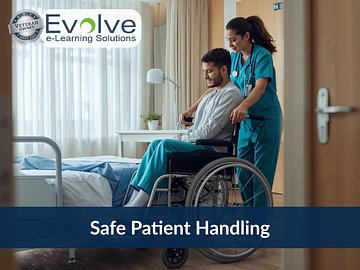
Safe Patient Handling
35 min! Run Time
Employees
only
of Completion
What you'll learn
Description
Learners will explore the principles of ergonomics and musculoskeletal disorders, identify patient handling risk factors, and learn how to mitigate them through effective job planning and the correct application of lifting and transfer techniques. The course covers the decision-making process for safe lifts and transfers and details the broader benefits of implementing a formal safe patient handling program at the organizational level. This course is updated to incorporate the VHA Safe Patient Handling and Mobility Algorithms (2014 revision) and the NAON Safe Patient Handling and Mobility Algorithms for the Adult Orthopaedic Patient, both available to learners as downloadable training resources.
Table of Contents
1. Introduction and Objectives
2. Ergonomics and Musculoskeletal Disorders
3. Planning a Patient Move
4. Lifting and Transferring Techniques
5. The Benefits of Safe Patient Handling
System Requirements
See System Requirements in the Coggno Knowledge Base
Author

Safe Patient Handling
Frequently Asked Questions
Manual lifting, moving, and repositioning of patients is identified as the single greatest risk factor for overexertion injuries among healthcare workers.
Consequences range from chronic back pain and musculoskeletal disorders to career-ending injuries, spanning both short-term strain and long-term disability.
Nurses, aides, physical therapists, and emergency workers are named as facing these handling hazards daily, often under time pressure that works against proper technique.
It starts with the principles of ergonomics and musculoskeletal disorders, building the reasoning behind the handling techniques taught later in the course.
Through effective job planning combined with the correct application of handling techniques, rather than technique alone without any planning beforehand.


Learners will explore the principles of ergonomics and musculoskeletal disorders, identify patient handling risk factors, and learn how to mitigate them through effective job planning and the correct application of lifting and transfer techniques. The course covers the decision-making process for safe lifts and transfers and details the broader benefits of implementing a formal safe patient handling program at the organizational level. This course is updated to incorporate the VHA Safe Patient Handling and Mobility Algorithms (2014 revision) and the NAON Safe Patient Handling and Mobility Algorithms for the Adult Orthopaedic Patient, both available to learners as downloadable training resources.