Hospitality
Last Updated 09/2026
English
Export to your LMS
Full Lifetime Access
Finish in
5h 40 min! Run Time
5h 40 min! Run Time
Made for for
Employees
only
Employees
only
Certificate
of Completion
of Completion
What you'll learn
Help employees develop skills on lessons related to the front and back of the house, housekeeping, valet, tourism, alcohol and beverage, kitchen safety, and more.
Skills covered in this course
Description
Hospitality is the friendly and generous reception of guests, visitors, and strangers. This training helps you create a superior hospitality experience across every part of an operation.
What this course covers:
- Front-of-house service fundamentals
- Back-of-house operations
- Bartending fundamentals
- Tourism basics
- Housekeeping standards
A well-rounded introduction to professional hospitality.
System Requirements
See System Requirements in the Coggno Knowledge Base
Author

Making the Workplace Safer and Smarter
HSI (Health & Safety Institute) is a recognized leader in Environmental, Health and Safety (EHS) and workforce development software, training, and compliance solutions.
HSI is your single-source partner for EHS, Compliance, and Professional Development solutions. HSI provides integrated e-learning content, training solutions, and cloud-based software designed to enable your business to improve safety, operations, and employee development. Across all industries, we help safety and technical managers, human resources, first responders, and operational leaders train and develop their workforce, keep workers safe, and meet regulatory and operational compliance requirements. We are a unique partner that offers a suite of cloud-based software solutions including learning management, safety management, chemical SDS management, and more, integrated with our content and training so businesses can not only monitor and manage multiple workflows in one system, but train employees via one partner.
Hospitality
Front of the House: 01. Introduction to Restaurants
In the restaurant industry, your customers will have high expectations for service and low tolerance for error. They may not notice how hard restaurant employees work to keep things running smoothly, but they are quick to notice any error or delay. The truth is, working in the restaurant industry can tough, but it can also be a rewarding career. This series of courses is designed to prepare you for the opportunity before you. In this program, we'll focus on a few basic questions: What are the different types of restaurants? What are some common restaurant jobs? What is the usual service process? The answers to these questions will introduce you to the inner workings of a restaurant. The rest of the series will build upon this foundation.
Front of the House: 02. Greeting and Seating Guests
First impressions form in seconds and are hard to change, which makes the host one of the most important roles in any restaurant.
What this course covers:
- Why the host sets the tone for the guest experience
- The process for welcoming guests to a restaurant
- Greeting and seating guests smoothly
- Tips for exceeding guest expectations
Part of a front-of-house training series.
Front of the House: 03. Interacting with Guests: Fundamentals
If you're a server, you probably don't need to be told of the importance of customer service. It's right there in your job title. You serve customers. To do so successfully, you'll need to understand the basic principles of customer service. That's what we'll cover in this course. We'll discuss what it means to have good people skills, professionalism, the necessary know-how, attentiveness, and flexibility.
Front of the House: 04. Interacting with Guests: Special Circumstances
All guests deserve high quality service and, as you know, consistent service is key to turning occasional visitors into regular customers. However, there are some special circumstances that require extra effort. Preparing for these situations in advance will help you react appropriately when they occur. In this course, we'll look at several special circumstances you're bound to encounter. These are: families with children, large groups, and persons with disabilities or health issues.
Front of the House: 05. Interacting with Guests: Difficult People
Everyone makes mistakes. It's an unavoidable fact of life. As much as you want to deliver perfect service to each and every customer, there will be times when your efforts fall short. In addition, there will be customers who are just...difficult. Difficult to please, difficult to communicate with, difficult to serve. What's a server to do? In this course, we'll look at tips and tricks for what to do when things go wrong. We're going to do this by examining three common scenarios.
Front of the House: 06. Understanding the Menu: What's for Dinner?
Guests expect you to be an expert on your restaurant. Whether it's your first day, or your 200th day, whether the menu has been overhauled or has been the same for years, you need to know it inside and out. You need to anticipate any possible question they might ask. Having to go ask the kitchen will slow down the service process, and the guests impression of you or the restaurant may go down. In this course, we'll discuss the best ways to get to know the menu: from ingredients to pronunciations, and more.
Front of the House: 07. Understanding the Menu: Writing Menu Descriptions
The menu is defined as the "list of foods available at a restaurant," but a well-written menu is more than a simple list. Your menu can and should be a persuasive selling tool that sets your restaurant apart. A few extra words and a little more description makes a difference, doesn't it? In this course, we'll look at some best practices for writing menu descriptions. This knowledge can come in handy. Menus are updated frequently and chalkboards that many restaurants use to advertise specials are updated even more often. You could easily be tasked with writing a few descriptions yourself.
Front of the House: 08. Understanding the Menu: What's on Tap?
Most restaurants offer an array of alcoholic and non-alcoholic beverages. Water, juices, milk, and soft drinks are relatively easy to understand. Most of us are already familiar with these items. It gets a little more complicated with the alcoholic beverages: wine, beer, and cocktails. Not only are there many, many more of these beverages available, but their higher price point makes ordering the right alcoholic drink a higher priority for guests. The ability to describe and recommend alcoholic beverages is an important component of customer service. In this course, we'll look at the basic characteristics of wine and beer. We'll also introduce some common cocktails.

Front of the House: 09. Serving Guests: Taking Orders
Depending on the restaurant, servers may have the opportunity to take each guests' order up to three times over the course of a meal. Once for the drink, once for the meal, and sometimes a third time for dessert. Multiply this process by the number of guests a server sees during a shift and...well, that's a lot of orders! In this course, you will learn how to efficiently and effectively transfer the customer's words to the kitchen team.
Front of the House: 10. Serving Guests: Table Service
It's a great moment for restaurant guests when they are served their meals. However, this much-anticipated moment can be prone to disaster for a server. Servers need to carry and balance a serving tray. They have to deliver the correct food to the correct person. The food must be plated perfectly. In this course, we'll share some tips and tricks for serving food courteously, efficiently, and professionally.
Front of the House: 11. Serving Guests: Time Management
The timeline for serving a table of guests is tight. In this course, we'll go over the timeline of an entire meal-starting from the moment the guests are seated to when they leave the restaurant. We'll also discuss ways to manage your time wisely when serving in a restaurant, including multitasking and prioritizing tasks.
Front of the House: 12. Clearing the Table and Closing the Sale
Even a great meal must end, and the close is your chance to treat guests with courtesy while preparing for the next table.
What this course covers:
- Tips for clearing the table with care
- How to close the sale respectfully
- Preparing the table for the next round of guests
Finish each service on a professional note.
Front of the House: 13. Tips for Tipped Employees
At restaurants in the United States, it's typical to tip. That is, customers usually leave a little extra money for the server when they pay their bill. Sometimes called a gratuity, the "extra" left behind varies widely depending on the customer and how they feel about the service. However, it's usually between 10-20% of the bill, so a customer who owes $20 for their food and drink may leave an extra four dollars for the server as a tip. While four dollars may seem like small change, in truth tips are a big deal for servers. In this course, we'll learn why this is and what your responsibilities are.
Front Desk Customer Service: 01. Etiquette and Presentation
At a hotel front desk, you are often the first person a guest meets, so first impressions count.
What this course covers:
- Why etiquette and presentation matter at the front desk
- Dress codes for a professional appearance
- How to greet guests using basic etiquette rules
- Things to avoid when working the front desk
You will help every guest's stay start on the right note.

Front Desk Customer Service: 02. Check-in and Check-out
When a guest arrives at the hotel, the registration process begins. The registration process is defined as the process of assigning rooms to the guest at the time of their arrival by filling out necessary details about the guest and the rooms. In most cases, it's a several step process that we'll discuss thoroughly in this program. When it comes to checking out of a hotel, the process is similar and involves several key things that need to be done that we'll cover here as well. Check-ins and check-outs are a critical part of the hotel experience, and as the face of the hotel, you need to know how to handle them properly.

Front Desk Customer Service: 03. Communicating with Guests
A hotel guest's experience is directly tied to the customer service they receive, and the front desk sets the tone.
What this course covers:
- Basic etiquette for communicating with guests
- Showing empathy at the front desk
- Keeping service consistent for every guest
- Handling the different means of guest communication
Front-desk communication essentials for a standout guest experience.

Front Desk Customer Service: 04. Telephone Techniques
Working the front desk of a hotel means proper telephone techniques and etiquette are vital to serving every guest well.
What this course covers:
- Knowing your phone system
- Identifying internal and external calls
- Transferring calls and placing callers on hold
- Listening carefully to every caller
You will handle front desk calls with the professionalism guests expect.
Front Desk Customer Service: 05. Handling Upset Guests
Working the front desk means handling guest complaints professionally, because a single bad experience can cost you a guest for good.
What this course covers:
- Why guest complaints are part of front desk work
- Handling complaints calmly and professionally
- Techniques to turn complaints into resolutions
- Keeping guests satisfied and coming back
Deliver front desk service that keeps guests loyal, self-paced on Coggno.
Housekeeping: 01. Cleaning Guest Rooms
Welcome to our series on housekeeping. You are part of creating a happy environment for guests. There are a lot of moving parts when it comes to this job, and there are certain protocols and procedures you need to follow. Throughout this series, you'll learn all of the basics on housekeeping. We'll talk about everything from cleaning guest rooms and public spaces, to doing your job safely, all while making sure customers and guests stay satisfied. In this first program, we're going to focus on cleaning guest rooms. We'll go over stocking the trolley, entering guests' rooms, and procedures for cleaning rooms.
Housekeeping: 02. Cleaning Public Spaces
Just because you're in housekeeping, doesn't mean you're strictly going to be cleaning guest rooms and guest rooms only. You'll also be responsible for cleaning public spaces. That includes places like the entrance, lobbies, front office, elevators, stair cases, guest corridors, banquet halls, health club, and the swimming pool. Public area cleaning is a most important and challenging task for the hotel and for the housekeeping staff. Most of the public areas see high foot traffic, so maintaining these areas are important. This course will train you on how to properly clean each of these public spaces.

Housekeeping: 03. Working Safely with Ergonomics
Housekeeping can be hard on your body. You're constantly moving, walking, standing, reaching, and bending. You're carrying heavy towels and sheets. You're pushing and pulling your trolley. You need to make sure that you're doing all of these functions safely. The Occupational Safety and Health Administration, or OSHA, has set guidelines for you to follow when it comes to performing your job. That's what this program is all about. We'll go over ergonomics and other basic definitions you'll need to know in the event that you're injured at work.

Housekeeping: 04. Interacting with Customers
As a housekeeper, you will interact with guests, whether waking them at the door or passing them in a public space. It is not your core task, but it matters.
What this course covers:
- Why guest interaction is part of housekeeping
- The common standard of excellent customer service in a hotel
- Common scenarios you may run into with guests
- How to handle each situation properly
Deliver great service in every guest interaction.
Food and Beverage: 01. In-Room Dining
Welcome to our series on Food and Beverage, a guide on how to operate any food related services in a hotel. This course covers in-room dining or room service. It's a personalized service where guests have the opportunity to order and enjoy food and
beverages in their own rooms. Why would a hotel offer room service? For starters, if provides guests with an intimate and private dining experience. In fact, some guests actually prefer to order room service. It gives the guest a chance to eat in private in the comfort of their own rooms. In this program we are going to cover the basics of room service. We'll start with the equipment you'll need, to the spaces you'll occupy, and then wrap up with how to conduct room service.

Food and Beverage: 02. Alcohol Basics
Serving food and drinks in a hotel means knowing the basics of alcohol safety, whether you work in the restaurant or handle room service.
What this course covers:
- The fundamentals of alcohol safety in hotel service
- Blood alcohol concentration (BAC) and what it means
- Staying compliant with the law
- The different types of alcohol served
Finish ready to serve alcohol responsibly and legally.
Food and Beverage: 03. Food Safety Plans
Food safety is a major responsibility for any hotel food and beverage team. This course gives you a primer on the requirements you need to meet.
What this course covers:
- Your legal and safety responsibilities in food and beverage
- How to protect guests from foodborne illness
- Recognizing and controlling common food hazards
- The role of a food safety plan
You will leave ready to help keep guests safe and your operation compliant.
Beverage: 01. Wine 101
Wine has a long history and a language all its own. This beginner's course gives you the essentials to serve it with confidence.
What this course covers:
- A brief history of winemaking and drinking
- How wine is made today
- The current styles of wine you're likely to serve
- Tips for helping customers choose a wine
- How to serve wine well
Start building the knowledge every server needs.
Beverage: 02. Beer and Spirits 101
In this course, we'll cover a short history of beer and spirits, how they're made, and some basic vocabulary.
Beverage: 03. Alcohol Safety
This course covers the basics of keeping your customers safe and healthy when serving food and beverages.
What this course covers:
- Food safety fundamentals
- Handling food allergies
- Responsible serving of alcohol
Essential safety knowledge for anyone serving food and drink.
Beverage: 04. Bartending Fundamentals
This course breaks down the basics of bartending so you are fully prepared behind the bar.
What this course covers:
- The right attitude for working behind the bar
- Essential bartending vocabulary
- The core tools of the trade
- Fundamental bartending techniques
You will finish with a solid foundation in bartending fundamentals.
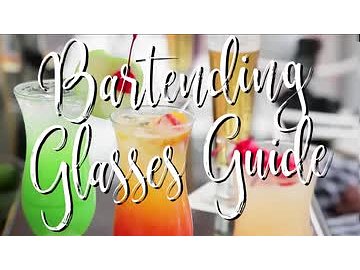
Beverage: 05. Bartending Glasses Guide
The right glass is part of serving a great drink, and this course introduces the glassware every bartender should know.
What this course covers:
- The most common types of beverage glasses used behind the bar
- Wine glasses and how they differ
- Beer glasses and their uses
- Cocktail glasses and when to reach for each
You will be able to recognize common bartending glassware and choose the right glass for each drink.

Beverage: 06. Bartending: The Pour
Pouring is where a bartender shows respect for the product. Pour wine, beer and spirits the right way and you turn technique into happy, loyal customers who come back.
What this course covers:
- Pouring and serving wine properly
- Pouring beer with attention to how it is presented in the glass
- Serving spirits with correct, consistent technique
- Why proper pouring builds guest trust and repeat business
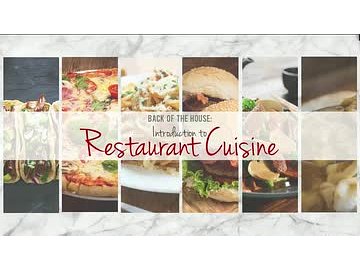
Back of the House: 01. Introduction to Restaurant Cuisine
This course provides the basic information you need about restaurants in general, giving you a foundation for working in the back of the house.
What this course covers:
- Common styles of cuisine and service
- The courses of a meal and the order they follow
- Tasks that help you stay efficient and prepared
- How the pieces fit together in a restaurant setting
You will build a solid starting point for back-of-house restaurant work.
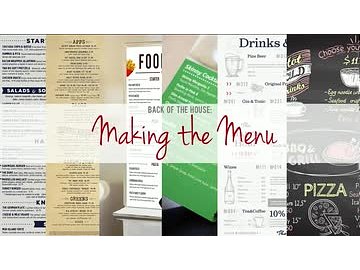
Back of the House: 02. Making the Menu
Your menu is one of your most powerful selling tools. This course shows how to build one that showcases your cuisine and encourages orders.
What this course covers:
- Layout considerations that guide the reader's eye
- How to organize your menu
- Showcasing specialty items
- Choosing language that helps make the sale
You finish able to design a menu that highlights your dishes and drives orders.
Back of the House: 03. Making the Menu: Presentation
Deliver on your menu's promise with food that looks as good as it tastes.
What this course covers:
- Why plating and presentation bridge the menu's promise and the plate
- Choosing the right tableware
- Designing effective place settings
- Plating food beautifully and consistently
You'll gain the skills to present dishes that impress every time.
Back of the House: 04. Kitchen Safety
Working in the back of the house means handling equipment and hazards that call for solid kitchen safety habits.
What this course covers:
- Proper dress and fall prevention
- Safe equipment use
- Preventing strain, sprain, and nerve injuries
- Chemical spill and burn prevention plus emergency preparation
Build the safety awareness that keeps a kitchen running smoothly.
Back of the House: 05. Knife Safety
The knife is one of the most common tools in any restaurant, and it is also one of the most dangerous.
What this course covers:
- How to handle a knife safely in the kitchen
- Common habits that lead to cuts and injuries
- First aid basics if you or a colleague is injured
A short, practical course to help keep everyone in the back of the house safe.
Back of the House: 06. Food Safety Plans
Food safety is a responsibility every restaurant team member must embrace.
What this course covers:
- The legal requirements behind food safety
- Core safety practices in the back of the house
- How to protect guests from foodborne illness
- Recognizing common hazards on the job
Do your part to keep every guest safe.
Valet: 01. Appearance and Professionalism
In this series, we're going to talk about what it takes to be a successful valet. You'll need to know about parking and returning customers' vehicles and safety essentials. But first we're going to talk about your appearance and professionalism as a valet.

Valet: 02. Parking Vehicles
Parking a guest's car is the moment a valet earns trust, and doing it properly and safely every time is what separates a good operation from a risky one. This course walks you through parking vehicles step by step.
What this course covers:
- The step-by-step sequence for taking a guest's vehicle and parking it
- Approaching, entering and adjusting an unfamiliar car with care
- Manoeuvring safely in tight lots, ramps and garage spaces
- Protecting the vehicle from scuffs, dings and avoidable damage
- Positioning and securing the car so retrieval is quick and orderly
Built for valet attendants and parking staff who want to park every guest vehicle properly, safely and with confidence.

Valet: 03. Returning Vehicles
Returning a vehicle is the last thing a guest remembers about your service. This course looks at how to properly hand cars back so the experience ends as smoothly as it started.
What this course covers:
- Retrieving the correct vehicle promptly and matching it to the right guest
- Bringing the car back to the guest safely and without incident
- Presenting and handing over the vehicle courteously
- Handling keys, belongings and final checks at the point of return
For valet attendants who want the return step to close out the guest experience on a strong note.

Valet: 04. Safety Essentials
Being a good valet means more than moving cars quickly. There are safety essentials you need to be familiar with, and this program walks through the safe driving habits behind them.
What this course covers:
- Safe driving habits a valet should apply to every vehicle
- Controlling speed and awareness in lots, driveways and garages
- Watching for pedestrians, guests and other vehicles in busy areas
- Everyday practices that keep guests, their cars and you protected
A practical safety refresher for valet attendants and anyone driving guest vehicles as part of their job.

Tourist Attractions: 01. Overview
This opening program is designed as an overview to the tourism industry.
What this course covers:
- An overview of how the tourism industry is structured
- Examples of major world attractions, including the Eiffel Tower, the Golden Gate Bridge, and the Great Wall of China
- How broadly the term "tourist attraction" can be applied
- The categories of attractions this first program introduces
The overview program that opens the series.

Tourist Attractions: 02. Serving the Guest
If you work in the tourism and hospitality industry, then you know that the number one most important part of your job is taking care of the guests. This can include many things, but in this course, we're going to focus on three main parts: good customer service, being a good communicator, and dealing with difficult situations.
Frequently Asked Questions
This course is designed for employees who need to complete Hospitality training
Yes. This course is designed to meet applicable federal requirements and commonly mandated state standards. Always confirm specific state or industry requirements with your local regulations.
The course takes approximately 340 minutes to complete and can be paused and resumed at any time.
Yes. Learners receive a downloadable certificate upon successful completion, which can be used for compliance records and audits.
Yes. You can assign this course to individuals or groups using Coggno’s LMS, or purchase multiple seats for your team.
Yes. This course can be exported for delivery in most learning management systems (SCORM compatible).
Yes. The course is fully self-paced and available 24/7.
Yes. This course includes a knowledge check to reinforce learning and verify completion.
Learners have lifetime access from the date of purchase.
Yes. A preview is available so you can review the course format and content before purchasing.
Yes. Content is reviewed and updated as regulations and best practices change.
Yes. This course is available for free with an active Prime Subscription.
Yes. Refund requests can be submitted within 30 days of purchase.