
Latex Allergy
20 min! Run Time
Employees
only
of Completion
What you'll learn
Description
This course provides a thorough overview of latex, including the important distinction between natural rubber latex and synthetic rubber, and explains why the prevalence of latex allergy has increased significantly over the past several decades. Learners will identify common latex-containing products found in healthcare environments, explore the three types of latex reactions and their associated symptoms, and learn how latex allergy is diagnosed. The course concludes with practical prevention strategies and workplace controls that employees can apply to reduce their risk of exposure and allergic response.
Upon completion, healthcare workers will have the knowledge needed to protect themselves and their patients from latex-related health risks in the clinical environment
Table of Contents
1. Introduction and Objectives
2. A Closer Look at Latex
3. Latex Reactions and Symptoms
4. Diagnosis and Prevention
System Requirements
See System Requirements in the Coggno Knowledge Base
Author

Latex Allergy
Frequently Asked Questions
An estimated 8 to 12 percent of healthcare workers are latex sensitive, making it a significant occupational health concern across clinical settings.
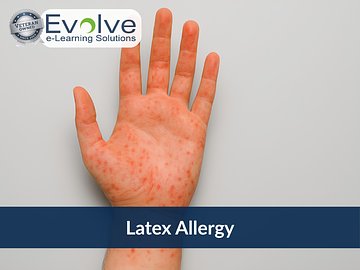
Reactions range from mild irritant contact dermatitis to severe, potentially life-threatening anaphylactic responses, which this course explains in detail.
The course draws this distinction clearly, since understanding it helps healthcare workers correctly identify which products actually pose a latex risk.
Latex allergy went from a rarely recognized condition in the late 1970s to a widespread occupational concern as latex use expanded across medical products.
By learning to recognize latex-containing products and understand personal risk, workers can take precautions that prevent or manage reactions in themselves and patients.






This course provides a thorough overview of latex, including the important distinction between natural rubber latex and synthetic rubber, and explains why the prevalence of latex allergy has increased significantly over the past several decades. Learners will identify common latex-containing products found in healthcare environments, explore the three types of latex reactions and their associated symptoms, and learn how latex allergy is diagnosed. The course concludes with practical prevention strategies and workplace controls that employees can apply to reduce their risk of exposure and allergic response.
Upon completion, healthcare workers will have the knowledge needed to protect themselves and their patients from latex-related health risks in the clinical environment