
Formaldehyde Safety
20 min! Run Time
Employees
only
of Completion
What you'll learn
Description
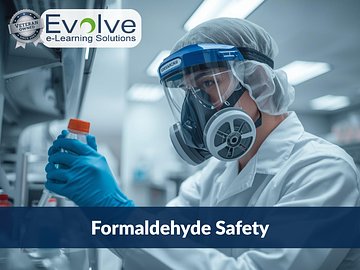
Learners will explore the primary uses of formaldehyde, the routes through which exposure can occur, and the health effects and symptoms associated with both short- and long-term exposure. The course covers OSHA exposure limits, the circumstances under which medical surveillance is required, and the proper procedures for responding to spills and exposure incidents. A dedicated section on exposure controls and prevention gives employees practical guidance on engineering controls, safe work practices, and personal protective equipment to minimize risk.
Upon completion, employees will have the knowledge needed to recognize formaldehyde hazards, respond appropriately to incidents, and apply effective controls to protect their health and safety.
Table of Contents
1. Introduction and Objectives
2. Exposure: Routes, Hazards, Symptoms
3. Exposure Limits and Medical Surveillance
4. Exposure Incidents and Spill Response
5. Exposure Controls and Prevention
System Requirements
See System Requirements in the Coggno Knowledge Base
Author

Formaldehyde Safety
Frequently Asked Questions
An estimated four million workers are exposed to formaldehyde across a broad range of industries, this course notes.
As a preservative in medical laboratories and mortuaries, and also as a disinfectant and germicide in clinical settings.
It's built around OSHA's Formaldehyde Standard, equipping employees to stay compliant while working safely with the chemical.
The routes through which formaldehyde exposure can occur, along with health effects tied to both short- and long-term exposure.
Because it's a colorless, strong-smelling gas that poses serious health risks when workers aren't properly trained on safe handling.
Learners will explore the primary uses of formaldehyde, the routes through which exposure can occur, and the health effects and symptoms associated with both short- and long-term exposure. The course covers OSHA exposure limits, the circumstances under which medical surveillance is required, and the proper procedures for responding to spills and exposure incidents. A dedicated section on exposure controls and prevention gives employees practical guidance on engineering controls, safe work practices, and personal protective equipment to minimize risk.
Upon completion, employees will have the knowledge needed to recognize formaldehyde hazards, respond appropriately to incidents, and apply effective controls to protect their health and safety.