
Compressed Gas Safety
20 min! Run Time
Employees
only
of Completion
What you'll learn
Skills covered in this course
Description
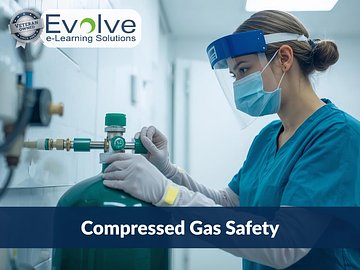
Learners will gain a thorough understanding of the hazards associated with compressed gases and the specific risks they present in healthcare environments. The course covers cylinder labeling, color coding, and identification requirements — equipping employees to correctly identify gases and avoid potentially life-threatening mix-ups. Learners will also explore cylinder safety systems, including pressure relief devices and valve protection mechanisms, and develop a working knowledge of safe use practices for compressed gas in clinical and procedural settings.
A dedicated module on safe transport and storage ensures employees understand how to move and store compressed gas cylinders in full compliance with applicable regulations, minimizing the risk of accidents, leaks, or catastrophic failures.
Table of Contents
Introduction and Objectives
Compressed Gas – Risks and Hazards
Compressed Gas – Safe Use
Cylinder Safety Systems
Compressed Gas – Safe Transport and Storage
System Requirements
See System Requirements in the Coggno Knowledge Base
Author

Compressed Gas Safety
Frequently Asked Questions
It covers responsibilities under regulations and guidelines from OSHA, the National Fire Protection Association, and the Food and Drug Administration.
It addresses oxygen, nitrous oxide, carbon dioxide, and other compressed gases used in clinical and surgical settings.
Medical gases are prescription drugs that carry significant safety risks if improperly used, handled, or stored, which is why regulatory oversight applies.
Mismanagement can result in serious injury or death to employees and patients, as well as fire, explosion, and property damage.
It covers cylinder labeling, color coding, and identification requirements so healthcare employees can correctly recognize each gas.

Learners will gain a thorough understanding of the hazards associated with compressed gases and the specific risks they present in healthcare environments. The course covers cylinder labeling, color coding, and identification requirements — equipping employees to correctly identify gases and avoid potentially life-threatening mix-ups. Learners will also explore cylinder safety systems, including pressure relief devices and valve protection mechanisms, and develop a working knowledge of safe use practices for compressed gas in clinical and procedural settings.
A dedicated module on safe transport and storage ensures employees understand how to move and store compressed gas cylinders in full compliance with applicable regulations, minimizing the risk of accidents, leaks, or catastrophic failures.