
Infection Control for Healthcare Workers
30 min! Run Time
Employees
only
of Completion
What you'll learn
Description
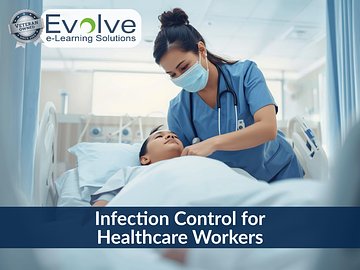
Learners will explore what HAIs are, why infection control is a critical organizational and individual responsibility, and how to identify the six links in the chain of infection — understanding how breaking any one of those links can stop an infection from spreading. The course covers the most common infectious agents and their distinguishing characteristics, the primary modes of transmission in healthcare environments, and the correct application of standard precautions in daily practice. Proper hand hygiene is reinforced throughout as the single most effective and accessible tool in any infection prevention program.
Upon completion, healthcare workers will be better prepared to recognize infection risks, apply evidence-based prevention strategies, and contribute to a safer care environment for patients, colleagues, and themselves.
Table of Contents
1. Introduction and Objectives
2. Healthcare-associated Infections (HAIs)
3. Chain of Infection
4. Infectious Agents
5. Modes of Transmission
6. Infection control
System Requirements
See System Requirements in the Coggno Knowledge Base
Author

Infection Control for Healthcare Workers
Frequently Asked Questions
It defines an HAI as an infection a patient acquires while receiving treatment for a different, unrelated condition in a healthcare setting.
The course covers HAIs across acute care hospitals, ambulatory surgical centers, long-term care facilities, and outpatient clinics.
Identified risk factors include indwelling medical devices, surgical procedures, antibiotic misuse, and transmission of communicable disease between patients and staff.
The course notes that HAIs can be caused by bacteria, fungi, viruses, and other pathogens encountered in care environments.
It equips healthcare workers with practical knowledge and tools to prevent or reduce the spread of infection and protect their patients.



Learners will explore what HAIs are, why infection control is a critical organizational and individual responsibility, and how to identify the six links in the chain of infection — understanding how breaking any one of those links can stop an infection from spreading. The course covers the most common infectious agents and their distinguishing characteristics, the primary modes of transmission in healthcare environments, and the correct application of standard precautions in daily practice. Proper hand hygiene is reinforced throughout as the single most effective and accessible tool in any infection prevention program.
Upon completion, healthcare workers will be better prepared to recognize infection risks, apply evidence-based prevention strategies, and contribute to a safer care environment for patients, colleagues, and themselves.