
The first time I watched a new supervisor do a “quick fire extinguisher check,” it took about three seconds. He glanced at the wall, nodded, and kept walking. Later that week, during a routine safety walk, we found the same extinguisher sitting half-hidden behind a cart with the pressure gauge sitting in the red. Nothing dramatic happened, but that’s the point. Most fire safety failures don’t announce themselves with alarms. They sit quietly on a bracket until the one day you need them.
Training employees to spot issues fast is like teaching someone to hear a rattle in a car engine before the breakdown. You don’t need a mechanic’s toolbox. You need a reliable pattern, practiced often enough that it becomes automatic. A fire extinguisher inspection certification supports that pattern by giving teams a shared checklist mindset, consistent documentation habits, and clearer accountability for corrections. This article lays out a practical, real-world approach for helping employees identify common extinguisher problems in under a minute, with coaching tips, examples, and a simple system supervisors can repeat across locations.
Why One-Minute Checks Matter More Than Annual Inspections
Most workplaces schedule annual inspections through vendors or safety teams. Those inspections are valuable, but they are not the daily reality of your building. Extinguishers can get bumped, blocked, discharged slightly, or damaged between inspections. A one-minute check closes that gap by catching the small issues that grow into “unusable when needed.”
Speed matters because people actually do what fits into the workday. If the expectation is a 10-minute form and a flashlight, it gets skipped. If the expectation is a consistent 45-second scan that anyone can learn, it becomes part of normal behavior. The goal isn’t perfection. It’s early detection and consistent reporting.
The Most Common Extinguisher Problems Employees Miss
A surprising number of extinguisher failures are visible from a few steps away. The problem is not that employees can’t see them. It’s that no one ever taught them what “wrong” looks like. When people only hear “check the extinguisher,” they default to checking that it exists.
Train your team to look for patterns: blocked access, wrong placement, missing parts, and signs of damage. Then reinforce what to do next, because a sharp observation without a clear reporting path still leaves the hazard in place.
Common issues that show up during quick checks:
- The extinguisher is blocked by boxes, carts, furniture, or doors that swing into it
- The gauge needle is in the red, or the display looks cloudy or unreadable
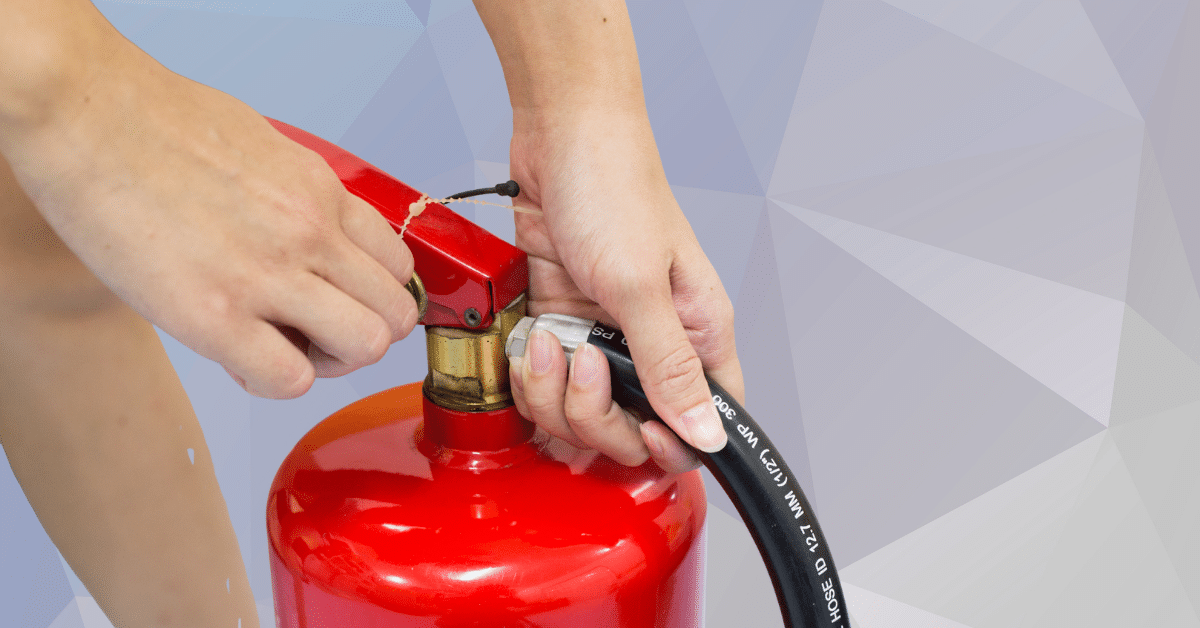
- The tamper seal is broken, or the pin is missing
- The hose is cracked, loose, clogged, or dangling
- The body is dented, rusted, oily, or visibly damaged
- The label is unreadable, peeling, or covered in grime
- The inspection tag is missing, outdated, or never marked
What “Under A Minute” Looks Like In Real Life
A one-minute check is not a sprint. It’s a repeatable rhythm. Think of it like washing your hands the right way: once it’s learned, it feels natural and consistent. The best checks use the same sequence every time so employees don’t forget steps when they’re busy.
Start by setting a clear expectation: employees do not need to lift the extinguisher or dismantle anything. They are scanning for obvious problems, confirming access, and reporting issues quickly. When the scope is clear, people feel more confident doing it without hesitation.
Train A Simple Visual Routine: The 5-Point Scan
When teaching fast checks, keep the routine short enough to remember and structured enough to repeat. A five-point scan works well because it fits on a mental sticky note. Use live examples during training, not just photos. Employees learn faster when they can physically stand in front of a unit and practice.
Explain that the scan should always start the same way. That consistency turns it into a habit. Then have employees repeat it across two or three extinguishers in different areas, so they learn to adapt to real placement and lighting.
A strong five-point scan:
- Access: Is it visible and reachable without moving anything?
- Pressure: Is the gauge needle in the normal range?
- Pin and Seal: Is the pin present and the seal intact?
- Hose and Nozzle: Is the hose attached and free of damage?
- Condition and Tag: Is the body in good shape and the check record current?
H2: Spot Extinguisher Problems Using A “Stoplight” Mindset
This is the coaching approach that makes training stick. Teach employees to classify what they see into three simple buckets: green, yellow, red. It keeps decisions fast and reduces debate. People stop wondering “Is this a big deal?” and start acting.
Green means the unit is accessible, intact, and looks ready. Yellow means something is off but not an immediate emergency, like a dirty label or a loose bracket. Red means the unit may not function or may be unsafe: missing pin, broken seal, gauge in the red, visible damage, or blocked access that would slow response.
Coach employees to respond based on the stoplight result. Yellow gets reported and scheduled for correction. Red gets reported immediately, and the area gets a temporary control if needed, such as clearing the obstruction right away or alerting a supervisor to replace the unit.
Use A Short Script So Employees Know What To Say
Many employees hesitate because they don’t want to sound alarmist. A simple script removes that friction. It also helps supervisors get the information they need without playing twenty questions. The script should focus on location, the issue, and what the employee did in the moment.
Give the team examples that match your workplace. A warehouse will have different phrasing than a clinic or restaurant. The structure remains the same: identify, describe, report.
A quick reporting script:
- “Extinguisher location: north hallway by the break room.”
- “Issue: gauge in the red and seal is broken.”
- “Action taken: cleared area around it and notified supervisor for replacement.”
A Practical Training Format That Fits A Busy Workplace
Training works best when it respects time and attention. Instead of one long lecture, split it into short segments: a 10-minute explanation, a 15-minute walkthrough, and quick practice rounds. People retain more when they do the steps themselves.
Schedule practice in the actual work environment. If training happens only in a classroom, employees may not connect it to what they see on the floor. When they practice at real extinguisher stations, they learn how lighting, clutter, and daily traffic affect access.
A good training flow:
- Explain the five-point scan with a real unit in front of the group
- Demonstrate once while narrating what you’re checking
- Let each employee perform the scan while the trainer listens
- Use two “planted” issues (like a blocked unit and a broken seal) for practice
- Close by reinforcing how and where to report
Build Consistency With A Single Tool Everyone Recognizes
Many workplaces have too many forms. When tools multiply, habits fade. Give employees one simple aid they can rely on. A small card, a sign near safety boards, or a short digital checklist can keep the scanning pattern consistent across shifts.
Use the phrase “Fire Extinguisher walkthrough checklist“ once in the training materials and keep it consistent with the five-point scan. The value here is not paperwork. It’s shared language and shared expectations. When everyone uses the same terms, reporting becomes clearer and fixes happen faster.
Coaching Supervisors: How To Reinforce Without Policing
The fastest way to kill participation is to make checks feel like a trap. Employees should feel that reporting problems is helpful, not risky. Supervisors set that tone. If the first report gets a negative reaction, the next report never happens.
Coach supervisors to respond with curiosity and appreciation. Even if the issue is minor, the employee did the right thing by noticing and speaking up. Over time, that response builds a culture where people flag hazards early rather than hoping someone else will handle it.
Supervisor coaching habits that work:
- Say “Thanks for catching that” before asking questions
- Fix easy issues immediately when possible, like clearing an obstruction
- Track repeated issues by area to find root causes
- Share quick wins in huddles: “We replaced two units this week after reports”
- Avoid blame language when tags are missed or areas get cluttered
How This Fits Into Wider Workplace Training Programs
Fire safety doesn’t sit alone. It ties into housekeeping standards, maintenance routines, and overall workplace behavior. Many organizations bundle safety topics during onboarding and annual refreshers, and that’s a smart approach. When employees learn that safety expectations are consistent across topics, compliance feels less random.
Some employers also schedule required training during the same season as safety refreshers. While these subjects are different, the shared thread is a workplace culture where people can speak up early. Employees who feel comfortable reporting a concern are more likely to report a blocked extinguisher, a missing pin, or repeated clutter in an exit path.
Real-World Examples: What “Wrong” Looks Like On The Wall
Examples help employees build a mental library. During training, describe a few common “wrong” scenarios they’re likely to see in your environment. Make them specific and familiar, not abstract.
For instance, in an office, the problem might be a printer cart parked in front of an extinguisher during a busy week. In a restaurant, it might be grease buildup and a missing seal. In a warehouse, it might be pallet stacks creeping into access space. The details matter because they help employees notice similar issues later.
Preventing Repeat Problems With Small Process Changes
If the same extinguisher gets blocked every week, that’s not an employee problem. That’s a workflow problem. Fix the environment so the right behavior is easier. Small changes often make the biggest difference: moving a cart parking spot, adding a visual boundary, or adjusting storage rules.
Also, look at what makes checks get skipped. If employees have no clear ownership, assign zones. If shifts change frequently, tie checks to a role rather than a person. When accountability is clear, the habit becomes stable.
Process tweaks that reduce repeat issues:
- Mark a “keep clear” box on the floor around extinguisher stations
- Assign monthly zones to specific teams or shift leads
- Place a small reminder sign at clutter-prone stations
- Review repeated issues in safety meetings with practical fixes
- Add a short spot-check during supervisor rounds
Conclusion
Fire extinguishers are like seatbelts on the wall. You don’t think about them until the moment you need them, and that moment is not the time to learn they’re missing a pin or buried behind a cart. Training employees to identify problems in under a minute is one of the highest-return safety habits a workplace can build.
Pick one area this week and run a short practice session. Teach the five-point scan, reinforce the stoplight mindset, and make reporting easy. When employees can spot issues quickly and supervisors respond well, small problems get corrected before they become the kind of story no one wants to tell.
FAQ
How Can Employees Spot Extinguisher Problems Fast Without Special Tools?
Most issues are visible with a consistent routine. Teach employees to scan access, pressure gauge, pin and seal, hose condition, and the unit’s overall shape and tag status. The key is repetition in real work areas. When the same scan is used every time, employees can spot extinguisher problems quickly even during busy shifts, without needing to handle the unit or use equipment.
What’s The Biggest Red Flag During A One-Minute Extinguisher Check?
A missing pin, broken tamper seal, or a gauge reading in the red should trigger immediate reporting. Those signs suggest the extinguisher may not discharge correctly when needed. Blocked access is also a major red flag because it delays response time. Training should emphasize that spotting these issues early is always better than waiting for the next scheduled inspection.
How Often Should Employees Do Quick Extinguisher Checks?
That depends on your environment and risk level, but a monthly rhythm works well for many workplaces, with more frequent checks in high-traffic or higher-risk areas. The goal is consistency. When employees regularly spot extinguisher problems as part of a predictable routine, issues get corrected sooner and safety teams get better visibility into patterns across the building.
What Should An Employee Do After They Find A Problem?
Start by keeping the response simple: note the location, describe the issue, and report it through the approved channel. If the problem is blocked access, clear the obstruction right away if safe to do so. If the unit appears unusable, notify a supervisor promptly so the extinguisher can be serviced or replaced. Quick, calm reporting keeps the process moving.
How Do You Keep Employees Engaged So Checks Don’t Become “Box Checking”?
Make checks practical and visible. Use short practice sessions with real examples, recognize employees who report issues, and fix problems quickly when they’re flagged. When employees see that reports lead to action, the habit feels meaningful. Over time, the team gets better at spotting extinguisher problems because they trust the process and know their attention makes a real difference.