
Most organizations work on tight deadlines as it is. Now, imagine if such a deadline is at stake and you discover that there has been a compliance issue. Here’s the catch: you make this discovery at the eleventh hour.
While it’s good that someone missing a critical safety step is caught at the right time, this could turn into panic real quick. As chaos and finger-pointing follow, you realize that no one was truly trained for this scenario.
In truth, such situations can take place more often than we think. The consequences? Well, they can be devastating and far-reaching. Your safest bet is to steer clear of mistakes that have already occurred. Essentially, take notes from past compliance failures.
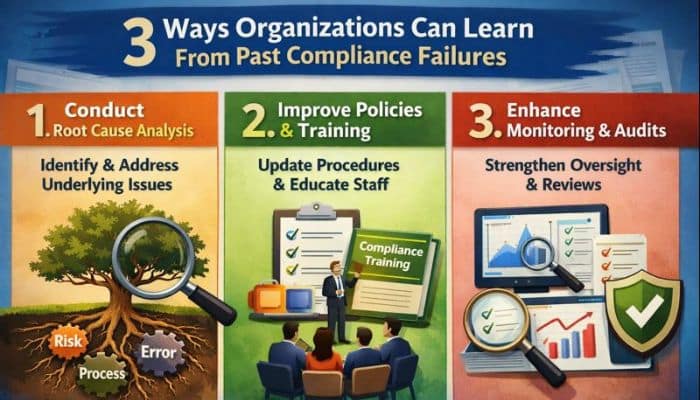
This article will explore three actionable steps to achieve this goal. They will help your team avoid costly mistakes and operate with greater confidence and safety.
Implement Mandatory, Scenario-Based Training

A strong compliance culture begins with employee training that prepares them for real situations, not just cursory modules. More often than not, organizations assign generic training, one that employees may complete but with little understanding.
As a result, the workforce looks trained on the outside. Sadly, in practice, it lacks the awareness and decision-making skills needed to prevent risks and enforce policies. If training is to become effective, it should imitate real-world workplace scenarios.
Scenario-based training engages employees by presenting them with realistic challenges they might face on the job. This helps bridge the gap between theory and practice. The following key elements make scenario-based training impactful:
- Content that is specific to roles: Modules can be tailored to present employees with situations they are likely to encounter based on their role.
- Interactive exercises: Case studies and simulations can help foster active learning.
- Assessment and feedback: The training program can be followed by practical quizzes or tests that measure comprehension.
- Tracking of progress: It’s important to keep track of who has completed the training and who is due.
Did you know that data backs this up? Organizations with robust training programs reported a 30% reduction in workplace incidents by mid-2024 compared to those with minimal training. Quality training is imperative if safety and compliance are to be strengthened.
Even real-world examples for this exist. In 2024, prosecutors in New York City indicted a safety training provider and several executives for operating a sham safety school. The school issued safety certificates and cards to around 20,000 construction workers without providing the required training.
Unfortunately, one of the falsely certified workers fell to their death on a construction site. Official inspections even found empty classrooms where safety instruction was supposed to occur.
Incomplete or fraudulent training leads to compliance issues and puts lives at risk. Organizations that want to avoid a similar fate must make scenario-based training their biggest strength.
Establish Clear Accountability and Reporting Systems
Having strong policies in place is one half of the equation. Hence, it won’t work until you have systems in place that ensure that such policies function as intended. This is why clear accountability and reporting systems are so crucial. They ensure that employees know who is responsible for what and how leadership must respond when concerns are reported.
If there are no such systems in place, even well-intentioned compliance programs will ultimately fail. A 2024 report exposes a persistent ‘speak-up gap’ in organizations. 93% of the employees said that they would report misconduct should they see it happen. However, only 50% of those who witness something like this end up reporting it in real life.
Again, it only reiterates that having policies is not enough. To strengthen accountability and reporting, companies must:
- Define clear roles for ethical leaders and managers, so employees know who to turn to with their concerns
- Create simple and transparent reporting procedures, including options for anonymous reporting
- Introduce multiple channels of communication in the form of a manager, an HR representative, or even a hotline
- Close the feedback loop with follow-ups on how the organization is addressing a particular concern
The consequences of weak accountability structures are evident in cases like the Illinois juvenile detention center lawsuit. Allegations tied to the case describe systemic breakdowns in reporting and responsibility. Instances of abuse were not only allowed but also shielded in many cases.
As TorHoerman Law expounds, abusers were often protected by a culture of intimidation and retaliation. Naturally, the detained youth feared the repercussions of speaking up, which included solitary confinement or extended sentences. We see that reporting could have led to punishment instead of protection.
While this represents an extreme and deeply troubling scenario, its underlying lesson is broadly applicable. If people believe that reporting concerns will lead to punishment, silence will replace accountability. When responsibilities and consequences of violation are well-defined, minor failures seldom turn into high-impact crises.
Protect Vulnerable Populations With Preventive Measures
Every organization has certain populations that depend on it. These could be clients, employees, or other stakeholders. If it fails to protect their interests, there could be serious repercussions, even operational and legal consequences.
Besides a regulatory requirement, this is a fundamental part of responsible organizational management. You need to start by identifying who is vulnerable and why. In general, vulnerable groups may include minors, interns, external clients, or anyone at risk due to inexperience and systemic gaps.
Once the groups are known, take preventive measures to minimize risk and ensure safety. Essentially, the following steps should be included:
- Conduct regular audits and inspections of processes and work environments to detect any potential hazards early on.
- Assign clear supervision responsibilities to ensure protective measures are properly implemented.
- Foster a culture of awareness by encouraging employees to stay vigilant and speak up if they notice anything out of order.
A striking real-world example should serve as a lesson. In 2024, regulators discovered something shocking at a Hyundai auto parts facility in Alabama, US. A 13-year-old had been working long hours on an assembly line. The teen was exposed to significant safety hazards.
A thorough investigation revealed that inadequate vetting and weak preventive measures were responsible for this vulnerable worker’s plight. First of all, how was a child even hired? Moreover, we see that unless intentional steps are taken, vulnerable groups, even children, can come in harm’s way.
The process of identifying vulnerable populations and protecting them is a part of ethical responsibility. Besides reducing legal exposure, it cultivates a workplace where everyone knows that their welfare is a priority.
On a final note, organizations cannot take the lessons shared in this article for granted. As new technologies emerge on the horizon, the cost of weak systems will only grow. Future failures are likely to happen due to unclear accountability and preventive measures that were never tested in real-world conditions.
So, the lesson for the future is clear: prevention needs to evolve alongside risk. Organizations that implement the ways we just discussed are better prepared for what lies ahead. Those who still don’t wake up may discover that today’s ignored warning signs become tomorrow’s public reckoning.