
Introduction
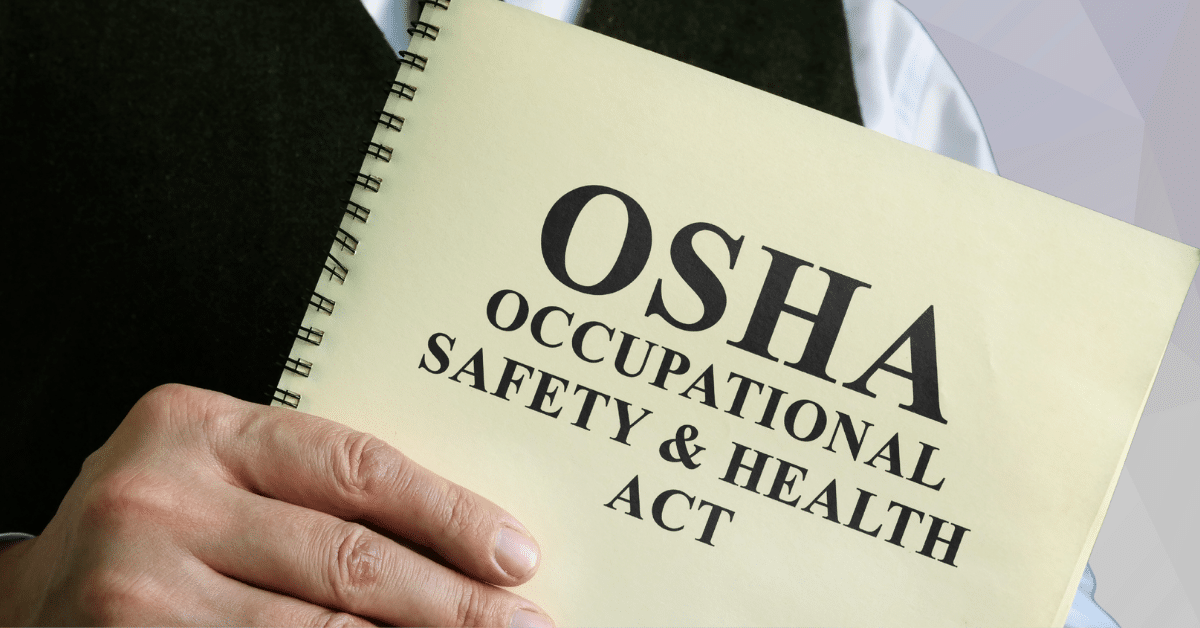
Safety is both a legal and ethical responsibility. While the legal obligation to provide a safe workplace and the ethical duty to protect employees exist within the construction industry, safety is not merely about meeting the minimum standards established by OSHA regulations.
The true challenge for safety managers is developing a comprehensive and targeted safety training program that minimizes the risks to which employees are exposed. One potential barrier to creating such a program is reliance on a “one-size-fits-all” approach to safety training. Generic programs fail to account for the high-hazard activities associated with specific crews or job sites.
This article outlines a strategic model for moving beyond compliance-based (generic) training programs that rely solely on OSHA-approved course bundles. Instead, it focuses on developing a training program tailored to the hazards of your employees’ workplace—ultimately resulting in a safer workplace.
Identifying Your Crew’s Unique Risk Profile
To find the best course package for your team, you must develop a clear and accurate risk profile. This profile represents a complete picture of all job-related hazards—including environmental hazards—to which employees are exposed during the workday.
Developing a risk profile requires moving beyond a compliance-based approach and implementing a true risk-based training program, which includes:
-
Identifying risks that pose the greatest threat to employees
-
Using a consistent method to evaluate those risks
-
Linking educational and training resources directly to identified hazards
Analyzing Incident and Near-Miss Data
One of the most effective ways to identify training gaps is by analyzing historical incident reports and near-miss records. Reviewing patterns by time, location, and job function can reveal recurring issues (e.g., sprains from falls off scaffolding) and help determine the type of immediate, targeted training required.
Conducting a Job Hazard Analysis (JHA)
A Job Hazard Analysis (JHA) is a systematic process that breaks a job into individual steps, identifies potential hazards at each step, and prescribes controls to mitigate those hazards [1].
For construction crews, JHAs for tasks such as steel erection, trenching, or operating heavy machinery can reveal precise knowledge and skill gaps that should be addressed through targeted training modules.
Considering Environmental and Project-Specific Risks
Environmental and project-specific factors significantly affect risk exposure. For example:
-
A construction team building a high-rise in a dense urban area faces different hazards than
-
A crew laying pipeline in a remote rural location
Hazards such as extreme weather, confined spaces, traffic control, and proximity to energized high-voltage power lines often require advanced training beyond standard OSHA coursework.
Choosing OSHA-Aligned Course Bundles That Match Your Crew’s Risk Profile
Once a risk profile is established, selecting OSHA-aligned course bundles becomes a data-driven process. The objective is to combine foundational compliance training with specialized modules identified through the JHA.
The Core: Foundational OSHA Outreach Training
Every construction worker needs baseline safety training. The OSHA Outreach Training Program provides essential knowledge for recognizing, avoiding, and preventing hazards.
-
OSHA 10-Hour Construction
Designed for entry-level workers; covers common hazards such as falls, electrocution, struck-by, and caught-in/between hazards. -
OSHA 30-Hour Construction
Intended for supervisors, foremen, and safety managers; provides more in-depth instruction on safety management, hazard communication, and OSHA standards.
The Customization: Specialized Training Modules
Once the risk profile is established, specialized training should be selected to address high-risk activities.
| High-Risk Activity (from JHA) | Specialized Training Module | OSHA Standard Reference |
|---|---|---|
| Working at Heights (Scaffolding, Roofs) | Fall Protection Competent Person, Scaffold User/Erector | 29 CFR 1926 Subpart M, L |
| Excavation and Trenching | Competent Person for Excavations, Soil Classification | 29 CFR 1926 Subpart P |
| Operating Heavy Equipment | Aerial Lift Safety, Forklift Operator Certification | 29 CFR 1926 Subpart L, 1910.178 |
| Handling Hazardous Materials | Hazard Communication (HazCom), GHS Labeling | 29 CFR 1910.1200 |
A quality training provider, such as COGGNO, offers flexible bundles that combine OSHA 10- or 30-hour courses with specialized modules to create a comprehensive, targeted training solution.
Beyond Content: Evaluating the Training Delivery System
High-quality content requires an effective delivery platform. When selecting course bundles, evaluate the provider’s Learning Management System (LMS) to ensure it supports a modern, flexible, and auditable safety program.
Key LMS Capabilities for Construction Safety
A robust LMS should address the following:
-
Accessibility and Flexibility
24/7 access on desktop and mobile devices to accommodate dispersed crews and varied schedules. -
Tracking, Reporting, and Audit Readiness
Automated recordkeeping, certification tracking, and secure document storage. OSHA requires detailed training records [2]. -
Quality and Authority of the Provider
Courses should be OSHA-authorized (for Outreach programs), current with regulations, and engaging to promote retention.
Reinforcement and Accountability
Training must be integrated into daily operations and company culture. Course bundles should support:
-
Weekly Toolbox Talks to reinforce jobsite learning
-
Formal evaluation of safety performance during employee reviews
-
Accountability based on training completion and application of knowledge
This approach reinforces that safety is a fundamental job responsibility.
The Financial Benefit of Targeted Training
Risk-aligned training provides measurable financial benefits. Organizations with effective safety programs experience up to a 40% reduction in injury rates [3]. Benefits include:
-
Lower workers’ compensation premiums
-
Fewer lost workdays
-
Reduced project delays
Investing in the right OSHA-aligned training bundles yields a high return through improved operational efficiency and business continuity.
Conclusion
A high-rise construction crew in an urban environment faces greater injury risks than a rural pipeline crew. Beyond general hazards such as extreme weather, confined spaces, traffic control, and energized power lines, many specialized risks cannot be addressed through basic OSHA training alone.
To effectively manage these risks, safety programs must shift from a generalized compliance model to a risk-based training model. This includes:
-
Conducting incident analyses
-
Performing job hazard assessments
-
Developing a unique risk profile for each crew
Based on this information, OSHA-approved course bundles can be selected to address both foundational and specialized training needs. A flexible, auditable training delivery system transforms safety training from an administrative burden into a competitive advantage—protecting employees and strengthening the bottom line.
Explore COGGNO’s training solutions to find the bundle that best aligns with your crew’s needs and elevate your safety standards.
References
-
U.S. Department of Labor, Occupational Safety and Health Administration. Job Hazard Analysis.
-
U.S. Department of Labor, Occupational Safety and Health Administration. Training Requirements in OSHA Standards.
-
National Safety Council. The Business Case for Safety.
FAQ
Authorized vs. Aligned: 10- & 30-Hour Outreach Training
Authorized OSHA training refers specifically to OSHA 10- and 30-hour Outreach programs taught by authorized instructors who issue DOL cards upon completion.
Aligned OSHA training follows OSHA-recommended best practices but is not formally authorized. All authorized training is aligned, but not all aligned training is authorized.
When Should the Risk Assessment Be Updated?
Risk assessments should be updated at least annually, and also when:
-
A significant incident occurs
-
New equipment or technology is introduced
-
A new project exposes the crew to different hazards
Will E-Learning Suffice for OSHA Training?
Yes, for knowledge-based portions of training. However, OSHA requires hands-on competency demonstrations for high-hazard tasks such as forklift operation or respirator use. Effective course bundles combine online learning with practical assessment methods.
What Is the Most Important Factor When Selecting a Course Bundle?
Identifying your crew’s greatest risks. General training ensures compliance, while targeted training addresses hazards most likely to cause injury or fatality. Choose bundles that allow customization and extend beyond Outreach requirements.
How Does an LMS Help With OSHA Compliance?
An LMS provides centralized, automated recordkeeping for:
-
Training attendance
-
Completion dates
-
Test results
-
Certification expirations
This documentation is critical during OSHA inspections and reduces the risk of citations due to incomplete records.