

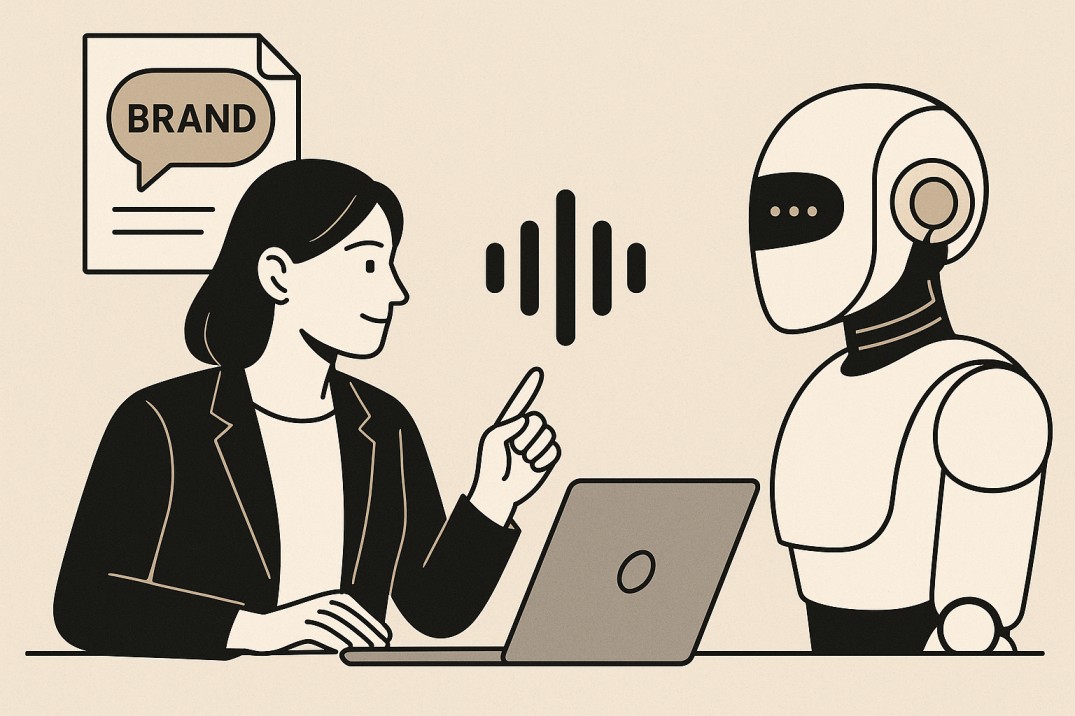
A good brand voice doesn’t shout. It doesn’t beg. It doesn’t try too hard. It just feels right with its the rhythm, the attitude, the way it knows when to lean in and when to pull back.
And then you open a document written by AI. It’s just not that.
That’s not because the tool is bad. AI can only echo what you feed it, which means if you want it to sound like your brand, you need to do the work of training it. But that doesn’t mean coding. It means curating, testing, guiding, and iterating until the tone finally lands with confidence.
If you’ve ever hired someone to help with writing, even a college essay writing service, you know how critical voice is. The words aren’t just words. They’re a feeling. That’s what we’re training AI to capture.
Start with Understanding Your Brand Voice
You can’t teach what you haven’t defined. Before you ask an AI tool to write anything, spend time mapping out your brand voice. This isn’t just tone. It’s pace, vocabulary, formatting quirks, and emotional tone. Think of it like a musical style: same notes, different mood.
Here’s what voice might look like in quick snapshots:
- Casual but informed
- Smart but not academic
- Short sentences, zero fluff
- Sharp, clever, and slightly irreverent
- Warm and empathetic
- Formal with a modern edge
- Conversational, like talking to a friend
These phrases might feel abstract now, but they’ll soon help you steer the AI in the right direction.
Build a Reference Folder
AI learns from patterns. You can’t just say “write with edge.” You have to give it examples of edge. Create a folder of content that actually sounds like you. This can include social captions, email intros, headlines, blog paragraphs, or landing page copy. If you were training an AI voice generator, this would be the place to add audio clips and speech samples.
Make sure you include contrast, too. Add examples of content that doesn’t match your voice, and explain why. These negative samples are just as useful in training the AI to steer clear of awkward phrasing, tone mismatches, or misplaced enthusiasm.
It’s a teaching file. You’re the guide.
Highlight What Makes Your Style Distinct
Once you’ve gathered the right content samples, your next step is to start dissecting them. You’re looking for patterns. What makes your writing feel like yours? What gives it personality, even when the topic is dry?
AI tools can’t guess your voice. They need clear markers. So the better you can explain what makes your tone tick, the closer the AI gets to writing something that actually fits.
Vocabulary and phrasing patterns
Does your brand use plain, simple words, or does it lean into insider language? Are there words you overuse because they just sound like you? Do you say “clients” or “customers”? “Team” or “crew”? Tiny choices, but they build the world your reader steps into.
Also: do you swear a little? Avoid adjectives? Mix tech terms with slang? Note it. The goal is to build a reference point that AI can actually mimic.
Sentence structure and length
Short, punchy sentences send a message. So do long, winding ones that take a scenic route through the thought. Most brands have a default rhythm. Some write like they’re in a hurry. Others slow things down, using repetition and pause to drive a point home.
Read your copy out loud. Do the sentences snap? Or do they settle in? This is one of the fastest ways to test if AI-generated writing sounds like it belongs to you or someone else entirely.
Humor, emotion, and style cues
If your brand is funny, define what kind of funny. Is it dry and subtle? Sarcastic? Wholesome and ironic? Or more of a wink-and-nudge type?
Same with emotional tone. Do you name feelings openly? Or keep things reserved and polished? Do you use metaphors, exaggeration, or tiny moments of self-awareness?
Mark the lines that made you smile, flinch, or reread them because they had rhythm. This is the emotional texture AI needs to learn.
What not to sound like
Sometimes, the best way to teach something is to show what not to do. Gather a few samples that completely miss the mark. Too stiff. Too salesy. Too cheery. Too chatty.
Then annotate why. “This feels robotic.” “This line talks down to the reader.” “This one loses the tone halfway through.” That contrast is what helps the AI calibrate. The wrong tone is just as useful as the right one, if you explain it.
Formatting preferences
Your voice isn’t just in the words. It’s in the layout. Do you like one-sentence paragraphs? Do you use bullet points for flow or clarity? How often do you use subheadings? Do you title them with attitude or keep them plain?
If your content tends to follow a certain visual rhythm, such as a snappy headline, short paragraph, list, and call-to-action, point that out. AI tools trained on full pieces (not just sentences) will pick up on those formatting habits and keep them consistent.
Write Prompts Like You’re Talking to a Freelancer
If you give generic prompts, you’ll get generic copy. “Write a blog post about time management” is a lifeless request. Instead, say something like:
“Write a blog intro in a warm, confident tone. The reader is overwhelmed, and we want to reassure them without sounding cliché or preachy.”
Better yet, feed in a voice sample and ask the tool to match its style. Ryan Acton, an education expert at the essay writing service EssayHub, puts it like this, “Training AI is like mentoring a junior writer. The more detailed you are, the faster it adapts.”
Test It. Then Test It Again
Once the AI writes something, don’t just approve or delete it. Use it as a learning opportunity for the tool and for you. Tweak the prompt. Add context. Cut a sentence. Ask for variations.
Here’s how to approach early training rounds:
- Ask it to rewrite a paragraph in two different tones.
- Provide a finished example and ask it to match the rhythm.
- Let it suggest three headline versions, and compare them to your original.
- Use one prompt with multiple brand samples, and observe how the tone shifts.
- Set constraints (e.g., “no adjectives,” “only one sentence per paragraph”) and see what happens.
The best AI content doesn’t come from one perfect prompt. It comes from trial, feedback, and small changes over time.
Conclusion
AI won’t write in your voice by accident. It needs to be shown, nudged, corrected, and tested, just like a real team member. That means your job is to give it the right raw material, clear instructions, and a reason to care about the details. With time, that effort pays off. You stop fixing awkward drafts and start seeing real alignment. The kind that feels like you wrote it yourself on your best day and with your best clarity. That’s when you know your voice training worked. And yes, it’s worth the work.