
The first time I heard someone say “OSHA,” it was not in a training room. It was on a loud jobsite, just after sunrise, when a supervisor stopped a worker from stepping onto a platform without the right fall protection. Nobody turned it into a speech. Nobody tried to make it dramatic. They just knew that one rushed choice could follow someone home in the worst possible way.
That moment stayed with me because it showed what workplace safety really is. Most of the time, safety is not flashy. It is quiet. It is the harness someone actually wears, the machine someone shuts off before fixing, the spill someone cleans up before the next person slips.
When people ask what OSHA means, they are usually asking for a definition. Fair enough. But the real answer is bigger than the acronym. OSHA is part of the reason ordinary work does not turn into avoidable harm.
What Does OSHA Mean In Real Life
OSHA stands for the Occupational Safety and Health Administration. It is the federal agency responsible for setting and enforcing workplace safety and health standards in the United States. That is the textbook definition, and it matters, but most people do not really want the textbook version alone.
In real life, OSHA is the system behind a lot of the rules workers run into every day. It is behind hard hat requirements, fall protection systems, machine guards, hazard communication labels, lockout procedures, and countless training requirements. Without OSHA, many employers would still be deciding for themselves how much safety was “enough,” and history has shown that does not end well for workers.
It helps to think of OSHA like the guardrails on a mountain road. You may not notice them every second, but when things start to drift, they are the difference between correction and catastrophe. That is why the agency matters. It turns safety from a vague intention into something concrete.
Why OSHA Was Created
Before OSHA was created in 1970, workplace safety in the United States was often uneven, weak, or ignored altogether. Some employers took safety seriously, but many did not. In dangerous industries, workers were sometimes expected to accept risks that would be unacceptable by today’s standards.
Factories, warehouses, construction sites, and industrial workplaces could feel like places where people were asked to trust luck far too often. Training was inconsistent. Equipment protection was lacking. Workers had fewer ways to raise concerns, and when they did, they did not always have much backing. If something went wrong, the consequences usually landed hardest on the worker and their family.
OSHA came out of that reality. It was created because too many injuries, illnesses, and deaths were happening in places where better rules and better habits could have made a difference. The agency gave workplaces a more consistent set of expectations and gave workers stronger rights when safety was being pushed aside.
That history matters because it reminds us that OSHA did not appear out of nowhere. It came from hard lessons. A lot of the rules people complain about today exist because someone, somewhere, paid the price before those rules were written.
What OSHA Actually Does
A lot of people think OSHA only shows up when it is time to inspect a workplace or issue a fine. That is only part of the story. Enforcement matters, but OSHA also plays a big role in education, prevention, and standard-setting.
The agency’s day-to-day purpose is pretty practical. It creates standards, investigates complaints, responds to serious incidents, and provides materials that help employers and workers understand safer ways to do the job. It also gives workers a process to report hazards when something feels wrong, and nobody on-site is dealing with it properly.
Its work generally includes:
- Setting and updating safety standards
- Inspecting workplaces and investigating complaints
- Issuing citations for violations
- Requiring employers to correct hazards
- Providing outreach, education, and training resources
That balance matters. Rules without education often become confusing. Education without accountability often gets ignored. OSHA lives in the space between those two things, which is part of why it has such a large footprint in American workplaces.
How OSHA Shows Up In The Workday
Most workers do not walk around naming OSHA rules in their heads all day. They just experience the result of them. A ladder is secured in a certain way. A chemical has to be labeled. A machine cannot be repaired while it is still energized. A walkway has to stay clear. A scaffold has to meet certain standards before people step onto it.
That is what makes OSHA part of everyday work rather than just government policy. It influences routines. It shapes decisions. It affects how sites are set up and how tasks are performed. When a workplace takes safety seriously, OSHA is often woven into the background so thoroughly that it just feels like “how we do things here.”
And that is probably where it works best. Not as a distant threat hanging over everyone, but as a normal part of the job. Good safety culture usually feels steady, not theatrical. It shows up in habits, reminders, checklists, inspections, and the expectation that people do not cut corners just because they are in a hurry.
The Worker Safety Role OSHA Plays
At its core, OSHA exists to protect workers from recognized hazards. That phrase sounds formal, but the meaning is simple. If a danger is known, it should not be ignored. Employers are expected to do something about it.
That sounds obvious now, but it was not always treated as obvious. OSHA helped move safety from “best effort if convenient” into a more serious legal and operational standard. It pushed the idea that worker safety is not a nice extra. It is part of the job.
You can see OSHA’s worker safety role in areas like:
- Fall protection on roofs, ladders, and elevated surfaces
- Respiratory protection in dusty or chemical-heavy environments
- Lockout and tagout procedures for machinery
- Proper handling and storage of hazardous materials
These are not random rules dreamed up in a vacuum. They are responses to patterns of harm. Workers were injured, made sick, or killed doing everyday tasks, and OSHA standards grew from those realities. In that sense, the agency carries a kind of institutional memory. It takes old mistakes and tries to keep them from becoming tomorrow’s routine.
Why Training Makes Such A Big Difference
A workplace can have safety posters on every wall and still be unsafe. A laminated rule does not do much if people do not understand it, believe it, or know how it applies when the workday gets messy.
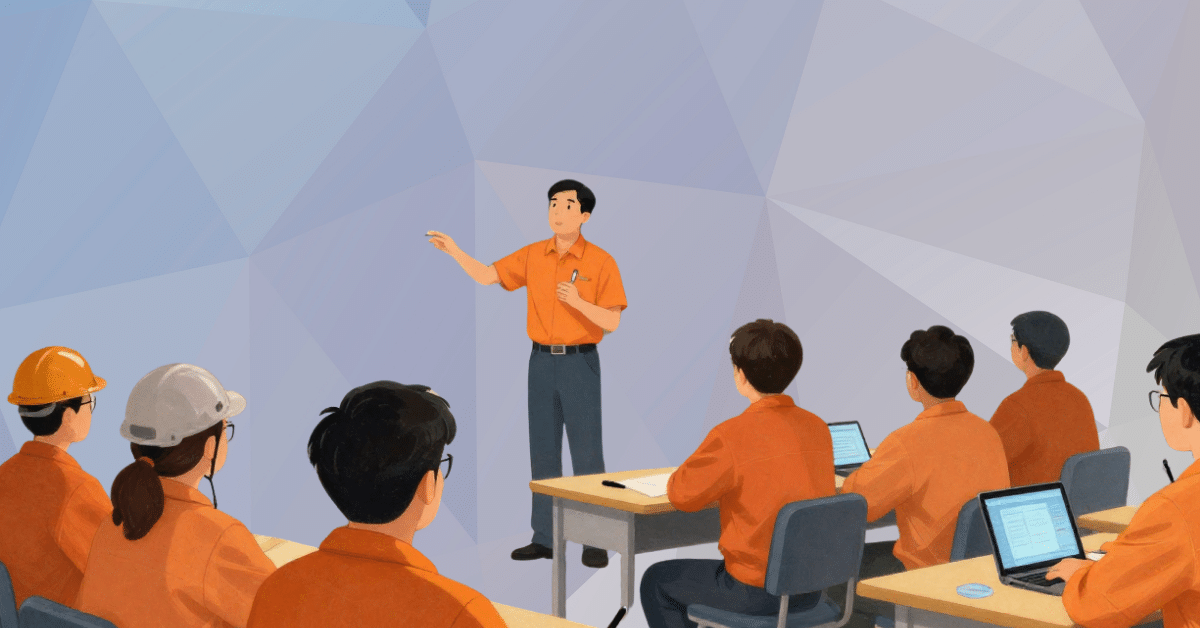
That is why training matters so much. It turns abstract rules into usable knowledge. It gives workers a language for risk. It helps them see the difference between a small issue and a serious one, and it makes them more likely to stop and speak up when something feels off.
For many workers, OSHA-10 training is one of the first places that awareness starts to click. The value of that course is not that it makes someone an expert overnight. It introduces workers to hazard recognition, basic safety principles, and their rights on the job. It helps them look at the workplace with a different set of eyes.
Once that shift happens, people tend to notice more. The missing guard on a machine. The blocked exit. The exposed cord. The missing tie-off point. Training does not make risk disappear, but it makes workers less likely to walk right past it.
What OSHA Means For Employers
From an employer’s perspective, OSHA can feel like pressure. Deadlines, documentation, inspections, corrective actions, and training requirements. All of that is real. But it is only one side of the story.
The other side is that OSHA gives employers a framework for building safer and more stable operations. Businesses that take workplace safety seriously often do more than reduce injuries. They usually improve consistency, communication, morale, and trust. A safer workplace tends to be a better-run workplace because fewer things are left to chance.
When employers build safety into their operations, the benefits can include:
- Fewer lost-time incidents
- Lower workers’ compensation costs
- Better employee retention
- Less downtime caused by preventable accidents
People do better work when they feel protected and respected. That is not just good ethics. It is good management. Workers can tell when a company treats safety like a real value and when it treats it like a speech reserved for inspection week.
The strongest employers do not see OSHA as an outside enemy. They see it as a baseline. Not the ceiling, just the baseline.
Common Misunderstandings About OSHA
OSHA gets talked about a lot, but not always accurately. One of the most common misunderstandings is that the agency only exists to punish employers. That is too narrow. Enforcement is part of the job, yes, but prevention and education are also central to what OSHA does.
Another misunderstanding is that OSHA only matters in construction. Construction gets a lot of attention because the hazards are visible and often severe, but OSHA standards also matter in warehouses, hospitals, factories, retail environments, offices, and many other settings. The hazards may change from place to place, but the idea behind the protections remains the same.
There is also frequent confusion around how to get OSHA 10 certified. In everyday conversation, people call it “getting certified,” but what usually happens is that a worker completes an authorized OSHA Outreach course and receives a Department of Labor card after finishing the course requirements. The process itself is usually straightforward. The wording around it is what throws people off.
A final misconception is that one training course settles the issue forever. It does not. Work changes. Equipment changes. Staff changes. People forget things. Safety needs reinforcement, not just a single moment of attention.
OSHA And Workplace Culture
This is the part people often underestimate. OSHA does not just enforce rules. It affects culture. And culture is what people feel long before they ever read a handbook.
You can usually tell pretty quickly what kind of workplace you are in. In one place, workers may be comfortable reporting hazards because they know management will listen. In another, people keep quiet because nobody wants to be seen as difficult. In one place, supervisors correct unsafe behavior early. In another, people shrug off shortcuts until something bad happens.
That difference is not accidental. Culture grows from repetition. It grows from what leaders reward, what workers tolerate, and what everyone learns to treat as normal. OSHA helps define the minimum standard, but good workplaces push beyond the minimum. They create an environment where safety is not just compliance. It is part of professional pride.
A healthy safety culture does not mean people are paranoid. It means they are alert. It means they understand that small things matter. A loose cable, a rushed lift, a skipped check, a blocked path. Most big incidents begin as small things that were waved off one too many times.
Why Understanding OSHA Still Matters
Even if you are not a site supervisor, safety manager, or business owner, understanding OSHA still matters. It helps workers recognize when something is unsafe. It helps employers build better systems. It gives teams a shared language for responsibility and risk.
On paper, OSHA is simply the Occupational Safety and Health Administration. In practice, it is a line that says worker safety cannot be left to mood, habit, or convenience. It is one of the reasons today’s workplaces are often safer than they were decades ago, even if there is still more work to do.
That is really what the question means underneath the surface. “What does OSHA mean?” It means there is a structure in place that says people matter more than shortcuts. It means safety is supposed to be built into the work, not added only after someone gets hurt. And once you start seeing OSHA that way, it stops sounding like a bureaucratic acronym and starts sounding like what it actually is: a standard people rely on, whether they realize it or not.
FAQ
What Does OSHA Mean In Simple Terms?
OSHA means the Occupational Safety and Health Administration. In simple terms, it is the federal agency that creates and enforces workplace safety rules in the United States. Its role is to help reduce injuries, illnesses, and deaths by requiring employers to maintain safer working conditions and by giving workers rights related to health and safety on the job.
Why Is OSHA Important For Workers?
OSHA matters because it gives workers protections they may not otherwise have. It requires employers to address known hazards, provide training, and follow safety standards that lower the risk of serious harm. It also gives workers the ability to report unsafe conditions without retaliation, which can make a major difference when a problem is being ignored onsite.
Does OSHA Only Apply To Construction Jobs?
No, OSHA does not only apply to construction. Construction is one of the industries most associated with OSHA because the hazards are visible and often severe, but the agency’s standards also affect manufacturing, warehousing, healthcare, retail, and office settings. The exact rules differ by industry, though the goal remains the same: protecting workers from preventable harm.
What Does OSHA Do During A Workplace Inspection?
During an inspection, OSHA reviews whether a workplace is following applicable safety standards. Inspectors may walk through the site, look at records, observe tasks being performed, and speak with employees. If they find hazards or violations, the employer may receive citations and be required to fix the issues. The process is meant to identify risks and push corrective action.
What Does OSHA Mean For Employers?
For employers, OSHA means they are responsible for providing a workplace that is free from recognized hazards as much as reasonably possible. That includes training workers, following safety rules, maintaining equipment, and correcting dangerous conditions. It also means safety has to exist in daily operations, not just in a binder or a policy document that nobody uses.