
The first time I failed an extinguisher during a routine walk-through, it wasn’t because it was empty. It was because I couldn’t reach it. A rolling rack of boxes had slowly inched into the corridor over a few weeks, like ivy creeping over a doorway.
The tag was current, the gauge looked fine, and the cabinet even had a little “FIRE EXTINGUISHER” sticker. None of that mattered in the moment that counts, because the extinguisher had become wall art.
That’s the quiet danger a fire extinguisher inspection course helps teams recognize. Most mistakes aren’t dramatic. They’re small, ordinary misses that pile up: a missing pin here, a blocked cabinet there, a rushed signature that turns a safety check into paperwork.
This guide breaks down the most common mistakes during inspections—and how a Fire Extinguisher Inspection Course can help you avoid them with practical habits your team can repeat month after month.
Why Small Inspection Misses Create Big Fire Risk
Fire extinguishers work best when fires are small, early, and close, which is exactly why inspection quality matters.
The catch is simple: an extinguisher can be “present” and still be useless. If it’s blocked, discharged, mislabeled, or overdue for service, it becomes a false comfort.
Good inspection habits are less like a checklist and more like buckling a seatbelt. You’re not doing it because you expect a crash today. You do it because guessing is a bad plan.
Fire Extinguisher Inspections Mistakes That Happen Most Often
A lot of facilities think they’re doing fine because they “check extinguishers monthly.” Then you look closer and see the same pattern. The person checking is scanning for a tag, not checking readiness.
Here are the mistakes I see repeated across sites, especially where multiple departments share responsibility:
- Treating an inspection like a quick glance instead of a readiness check
- Signing tags without touching the extinguisher or verifying access
- Skipping the parts that take 30 extra seconds: pin, seal, hose, bracket, cabinet latch
- Assuming the pressure gauge tells the whole story
- Letting “temporary storage” become a permanent obstruction
Those aren’t character flaws. They’re system problems: unclear ownership, rushed routes, poor placement, and training gaps. The fixes below are mostly about making the right action the easy action.
Access And Placement Problems: Blocked, Hidden, Or Relocated Extinguishers
The most common inspection failure is also the least technical: you can’t get to the extinguisher fast. Extinguishers drift behind open doors, stacked inventory, seasonal displays, rolling carts, or new equipment that wasn’t in the layout when the extinguisher was mounted.
Workplace rules focus heavily on having extinguishers properly placed, maintained, and available for employee use. OSHA’s portable fire extinguisher standard addresses placement, use, maintenance, and testing as part of the expectation for workplace readiness.
A solid inspection habit here is physical: stand where a person would stand during an alarm and walk the path. If you have to sidestep, move something, or open a jammed cabinet, treat that as a failed inspection item. Then fix the environment, not just the note on the tag.
Gauge Reading Errors: “It’s In The Green” Doesn’t Always Mean “Ready”
Pressure gauges create a lot of overconfidence. People see the needle in the green and move on, even when the extinguisher is partially discharged, damaged, or mismatched to the hazard. Some extinguishers don’t use a gauge the same way, which leads to bad assumptions.
The mistake often looks like this: a dry chemical extinguisher has a needle barely touching green, the hose is cracked, and the bracket is bent. The tag gets initialed anyway because “the gauge is okay.” That’s like judging a car by the fuel gauge while ignoring the flat tire.
Build your inspection process around a short two-part rule: (1) the extinguisher is reachable and secured, and (2) the extinguisher is intact and readable. If either one fails, stop treating the gauge as a hall pass.
Pin, Seal, Hose, And Nozzle Issues: Small Parts, Big Consequences
If you want a fast way to spot rushed inspections, look for missing pins, broken tamper seals, and hoses that haven’t been handled in months. These are the “telltales” that nobody actually checked the extinguisher. A seal can break from vibration, bumping, curiosity, or misuse. A pin can go missing after someone “borrowed” the extinguisher and put it back.
This is also where I like to remind teams that an extinguisher is part of a larger safety ecosystem. Fire safety equipment only helps when it’s ready, visible, and treated like a tool, not decor.
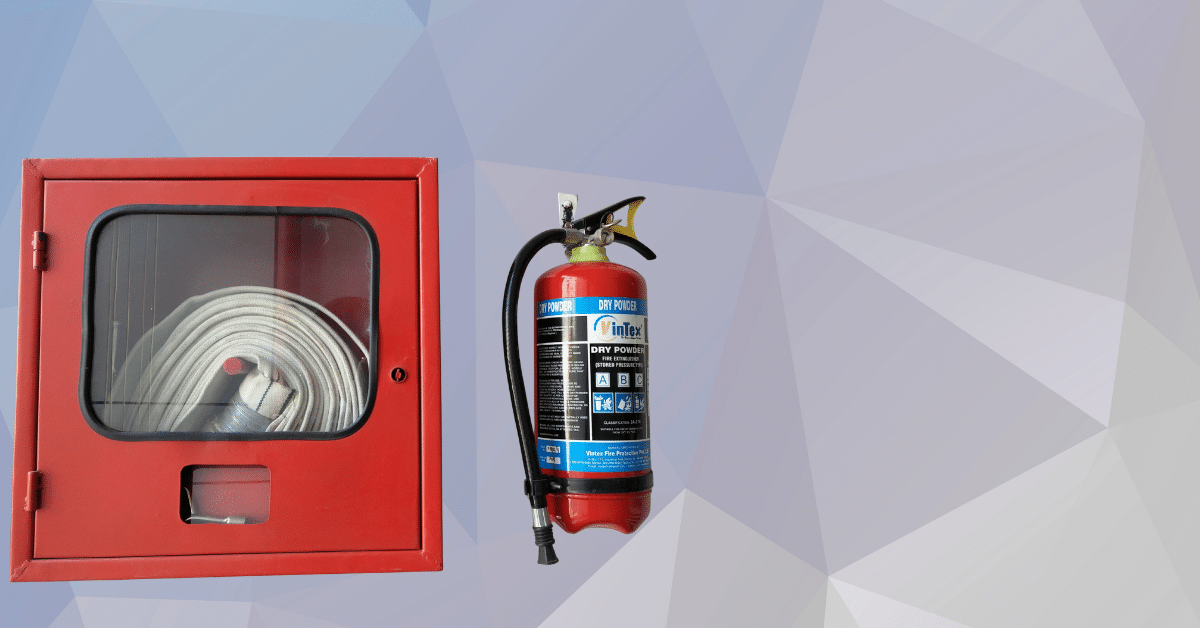
A practical approach is to make these parts impossible to ignore. During inspections, require a light touch sequence: hand on handle, confirm pin seated, confirm seal present, run fingers down hose/nozzle for cracks or clogs, confirm bracket holds the extinguisher firmly. It takes seconds, and it catches the failures that paperwork misses.
Missing Labels And Illegible When The Tool Can’t Teach The User
Another common miss is ignoring the label condition. Labels fade in sunlight, peel in humid rooms, get covered by paint overspray, or become unreadable under grime.
During an emergency, the label is a mini-instruction card. If it’s illegible, you’ve removed guidance from the moment a nervous person needs it most.
The mistake isn’t just “label is ugly.” It’s “label is unreadable,” which can lead to the wrong extinguisher being used for the wrong fire, or the right extinguisher being used incorrectly.
Even trained staff can blank out under stress. Clear instructions reduce hesitation.
At minimum, your inspection should confirm: the label is present, the label is readable, and the extinguisher type and rating can be identified quickly. If you can’t read it from a normal standing distance, treat it as a service item.
Documentation Mistakes: Tags Signed, Records Missing, Reality Unknown
Tags and logs are where good programs quietly fall apart. The biggest errors here usually come in two flavors: the inspection happened but wasn’t recorded correctly, or the record exists, but the inspection didn’t really happen.
Here’s what this looks like in the real world: identical handwriting across every extinguisher, same date, same initials, no notes, month after month.Or a missing year of records because someone changed vendors and nobody migrated the documentation. Or inspection sheets filed in a folder nobody can find during an audit.
A cleaner record practice is simple and boring, which is exactly what you want in safety administration:
- Use consistent locations for records (same digital folder, same naming format)
- Track “out of service” actions with dates (removed, replaced, sent for service)
- Note any correction made on-site (cleared obstruction, replaced sign, remounted bracket)
- Keep monthly checks separate from technician service so responsibilities don’t blur
NFPA guidance commonly discussed in industry ITM (inspection, testing, and maintenance) emphasizes that readiness is a cycle: visual checks, ongoing maintenance, and periodic deeper service. Your records should reflect that rhythm instead of looking like a monthly autograph sheet.
Wrong Extinguisher Type For The Hazard: The ABC Assumption
I’ve heard “It’s ABC, so it’s fine” in warehouses, offices, commercial kitchens, and labs. That assumption creates risk because hazards aren’t all the same. Commercial cooking areas, electrical rooms, flammable liquid storage, and metalworking can demand different extinguisher types, placement logic, and service routines.
This mistake shows up during inspections when people check the extinguisher condition but ignore whether it belongs there. The extinguisher might be in great shape and still be the wrong tool for that location’s likely fire scenario.
A practical fix is to add one question to your inspection route: “Does this extinguisher match what happens in this room?” If you don’t have a hazard map, start with a simple walk-through: where do oils, heat, sparks, solvents, or energized equipment exist?
Then, validate the extinguisher type and placement against that reality.
Practical Takeaways For Better Inspection Quality
If you only change one thing, change this: stop treating inspections like proof that extinguishers exist, and start treating them like proof that extinguishers are usable. That mental shift turns a quick walk-by into a readiness check.
A good inspection program doesn’t need fancy software or complicated forms. It needs clear ownership, a repeatable route, a short hands-on checklist, and follow-through when something fails.
If you build that, your tags stop being paperwork and start being a quiet promise: when someone reaches for the extinguisher, it will behave like a tool, not a prop.